rady — the terminal-first RadMah AI client
A friendly, chatty, colored CLI that drives the full RadMah AI platform — every job, every chat session, every engine, every evidence bundle — without leaving your shell. Same binary across Free, Sovereign, and Enterprise tiers; only the --base-url changes.
One command to log in
Paste an API key once, server-verified, persisted in your OS credential store (macOS Keychain / Windows Credential Manager / Linux Secret Service). Zero plaintext on disk, zero env var leaks.
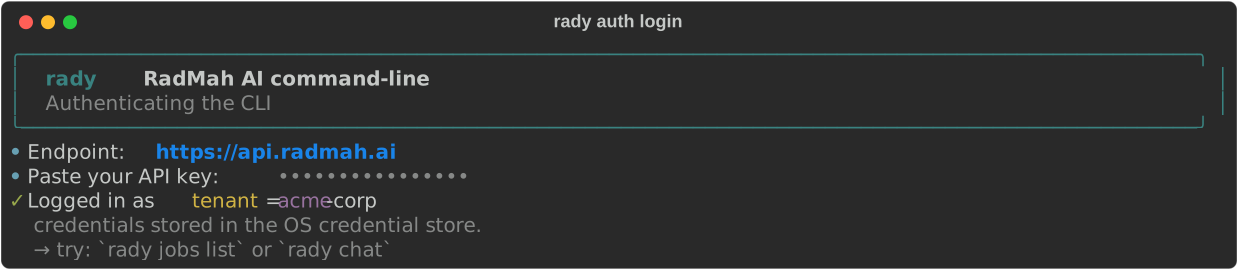
rady auth login
rady auth whoami
rady auth logout
Reviewed data generation from a natural prompt
Describe what you want in English; rady fabricate preview drafts a contract for review, refine edits it in plain English, and approve seals it, runs generation, waits for completion, and downloads the artefact. Credits metered server-side — client-side wait ceiling via --timeout.

PV=$(rady fabricate preview \
    "100 SaaS accounts with MRR 50-5000 and churn_risk low/medium/high" \
    --rows 100 --seed 42 --quiet)
rady fabricate approve $PV --rows 100 --output ./mock.csv
Chat with the AI assistant
Interactive REPL with prompt_toolkit history (↑/↓), slash commands (/jobs, /approve, /quit), and rich Markdown rendering of assistant output.
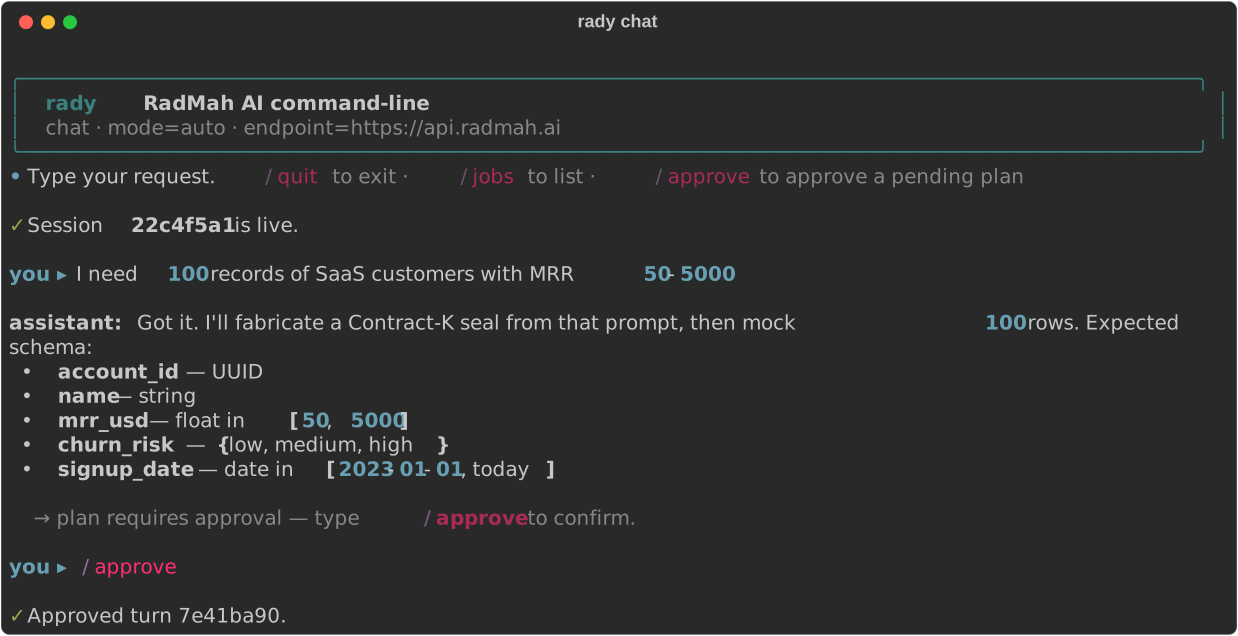
rady chat --mode auto
# Inside the REPL:
#   /jobs     → list recent jobs
#   /approve  → approve the current plan
#   /quit     → exit (session stays open server-side)
Job lifecycle in the shell
List, inspect, wait for, cancel, fetch artefacts, and pull sealed evidence bundles — everything the dashboard shows, scriptable for CI.
rady jobs list --limit 10
rady jobs get <id>
rady jobs wait <id>
rady jobs cancel <id> --yes
rady jobs artifacts <id>
rady jobs download <job-id> <artifact-id> -o out.csv
rady jobs evidence <id>
Why a separate CLI
One binary, every tier
Free, Sovereign, and Enterprise all use the same rady binary. The only difference is --base-url — Enterprise customers point at their own Docker stack (https://radmah.internal, with --allow-private-base-url or RADMAH_ALLOW_PRIVATE_BASE_URL=1).
Credentials never leak
API keys stored in the OS-native credential store via keyring. Never written to plaintext, never exported as an env var, never shown in error messages. API-key fingerprints are deterministic hash-6 — safe to log.
Engines stay server-side
The CLI is a thin wrapper around the SDK, which is a thin wrapper around REST. No engine code ever reaches the user's machine through this package — matches the Commerce.md §9 “SDK + VPLC Docker model” architecture.
Chatty by design
Progress spinners on every long call, colored outcome markers (✓ ! ✗), pretty tables for list output, and italic hints pointing at the next useful command after each action.
ℹAccess
SDK + CLI access is provided under agreement. Contact sales@radmah.ai to get set up.